
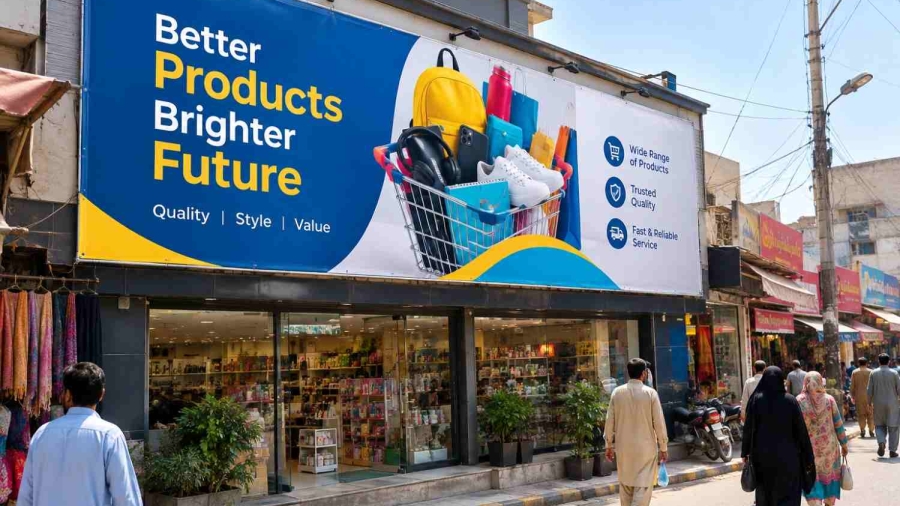
A great product does not sell itself. A well-run office, a good school, or a quality manufacturing unit can offer real value and still struggle to grow if the right people never hear about it. This is exactly where the importance of advertising for brands and companies comes in — it is the bridge between what a business offers and the customers who need it.
Advertising is not just about big television campaigns or expensive billboards. For most businesses in Pakistan, it is a mix of smart, practical steps: a clear message, consistent branding, and the right combination of print and digital tools to reach the intended audience. Whether you run a small retail shop in Lahore or manage a growing company with multiple branches, advertising decides whether people know you exist at all.
What is Advertising and Why Does It Matter?
Advertising is the process of communicating information about a product, service, or brand to a target audience, with the goal of creating awareness and encouraging action. It can take many forms — a printed brochure, a signboard outside an office, a social media post, or a well-designed catalogue handed to a client.
At its core, advertising matters because it connects supply with demand. A business can have the best pricing or the most reliable service, but without advertising, that message never reaches the people who would actually buy from them. It turns a hidden business into a visible one.
Why Advertising is Important for Brands and Companies
Understanding the importance of advertising for brands and companies becomes clearer when you look at the specific ways it supports a business. Here are the main reasons companies, schools, offices, and institutions invest in it.
1. Builds Brand Awareness — Advertising introduces your name to people who have never interacted with your business before. Repeated, consistent exposure — through signage, print materials, or online content — helps a brand become familiar rather than unknown.
2. Increases Brand Visibility — Being visible in the right places, whether that’s a banner outside your office or a listing in a local directory, keeps your business in front of potential customers at the moments they are making decisions.
3. Helps Attract New Customers — Clear, well-placed advertising brings in people who were not actively searching for you but respond to a message that speaks to their needs.
4. Builds Brand Recognition and Trust — When your logo, colors, and messaging appear consistently across business cards, letterheads, and packaging, customers start to recognize and trust your brand faster.
5. Communicates Products and Services — Not every customer knows the full range of what you offer. Advertising through brochures, flyers, and catalogues explains your services clearly and directly.
6. Helps Businesses Stay Competitive — In almost every industry, competitors are advertising too. A business that stays quiet risks being overlooked in favor of one that stays visible.
7. Supports Sales and Business Growth — More visibility and awareness typically translate into more inquiries, more foot traffic, and ultimately, more sales — helping a business grow steadily over time.
8. Helps Reach the Right Target Audience — Good advertising is targeted. Choosing the right channel, location, and message means your budget reaches people who are actually likely to become customers.
9. Strengthens Customer Engagement — Advertising is not always one-directional. Well-designed promotional materials, events, and campaigns invite customers to interact with a brand, ask questions, and build a relationship.
10. Creates Long-Term Brand Value — Every advertising effort adds to how a brand is perceived over time. Consistent, professional advertising builds a reputation that keeps paying off long after a single campaign ends.
Different Types of Advertising Businesses Can Use
There is no single “correct” way to advertise — the right mix depends on your audience, budget, goals, and industry. Common types include:
- Print advertising
- Brochures and flyers
- Business cards
- Catalogues and books
- Posters and banners
- Flex printing and vinyl printing
- Indoor advertising
- Outdoor advertising
- Promotional products (mugs, pens, bags, etc.)
- Corporate stationery
- Custom printed marketing materials
- Digital advertising (social media, websites, online ads)
Many businesses in Lahore and across Pakistan combine traditional print advertising with digital marketing. A restaurant, for example, might run social media ads while also using printed menus, table tents, and outdoor signage. A school might rely on printed prospectuses and banners alongside a website and social media page.
Why Print Advertising Still Matters in the Digital Age
It’s easy to assume that once a business has a social media page, printed materials become unnecessary. In practice, print advertising continues to play a strong role, even for digitally active brands.
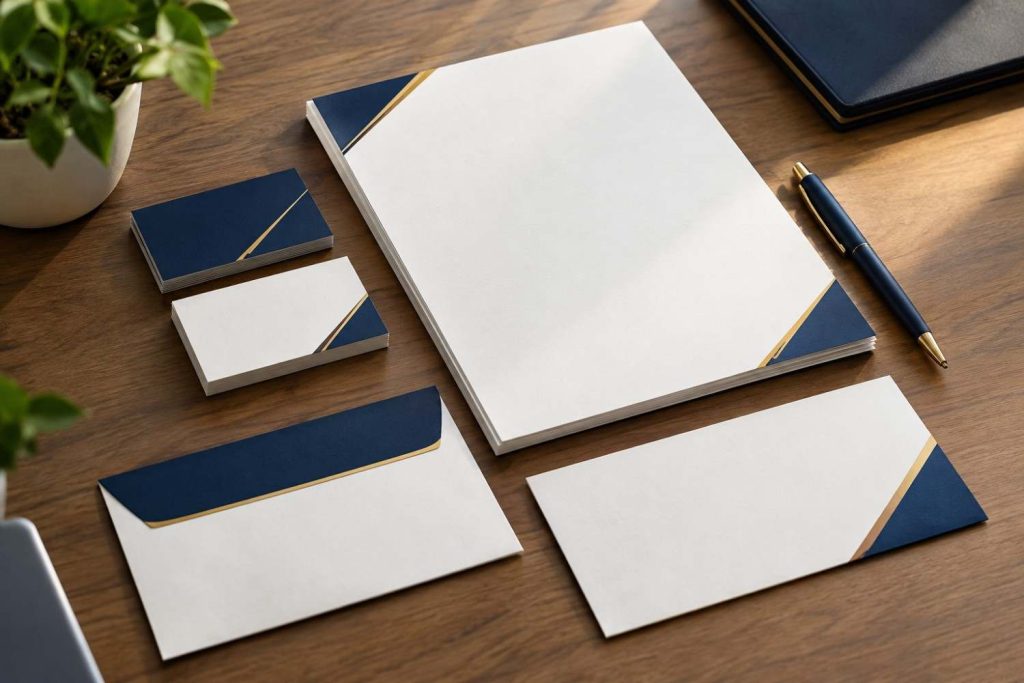
Items such as business cards, brochures, flyers, company profiles, product catalogues, letterheads, envelopes, promotional banners, posters, and branded stationery give a business a physical presence that digital content cannot replace. A well-printed business card handed over in a meeting often leaves a stronger impression than a digital contact shared over WhatsApp.
Physical marketing materials also support:
- Professionalism — a printed company profile or catalogue signals that a business is established and serious.
- Brand recall — people are more likely to remember a brand when they can physically hold or see its materials repeatedly.
- Customer interaction — printed flyers, menus, or brochures give customers something tangible to browse at their own pace.
- Offline visibility — not every customer is online at the moment they need a service; signage, banners, and printed materials reach them where digital ads cannot.
How Professional Printing Supports Brand Advertising
Advertising and printing are closely linked. A brand’s message only works if it looks consistent and professional wherever it appears — on a business card, a banner, a letterhead, or a product catalogue.
Consistency in logos, colors, typography, messaging, and layout across all printed materials helps customers instantly recognize a brand, whether they’re looking at an invoice, a flyer, or a signboard outside an office. Inconsistent or poor-quality printing, on the other hand, can make even a good brand look unreliable.
This is why choosing a dependable printing partner matters. Businesses, schools, and institutions that want their advertising materials to reflect their actual quality typically work with professional printing services that understand branding, not just printing. ZAA Enterprises, a Lahore-based general order supplier and printing solutions company, works with businesses, offices, schools, and institutions on exactly this — producing corporate stationery, brochures, flyers, catalogues, flex and vinyl printing, and other branded materials that stay consistent with a company’s identity.
Indoor vs Outdoor Advertising
Both indoor and outdoor advertising play a role in a complete advertising strategy, and each works best in different settings.
Indoor advertising includes signage, banners, posters, and promotional displays placed inside a business — such as a reception area, showroom, office, or retail counter. It reinforces branding for people who are already inside your space and helps guide their attention toward specific products, offers, or services.
Outdoor advertising includes signboards, flex banners, hoardings, and vinyl displays placed outside a business or in public spaces. It works to attract attention from people passing by, building visibility for those who may not yet know the business exists.
A shop in a busy Lahore market might rely on outdoor signage to draw in walk-in customers, while using indoor banners and promotional displays to highlight ongoing offers once customers step inside.
How Businesses Can Create an Effective Advertising Strategy
A few practical steps can help any business — small or large — build an advertising approach that actually works:
- Define your target audience clearly before choosing where to advertise
- Set specific, measurable advertising goals
- Maintain consistent branding across every material and channel
- Choose advertising channels that match where your audience actually is
- Invest in professional-quality materials rather than cutting corners
- Use a combination of online and offline (print) marketing
- Track results and learn which channels perform best
- Review and update campaigns regularly instead of repeating the same materials indefinitely

Why Businesses Should Invest in Quality Advertising Materials
Poor-quality printing — blurry logos, mismatched colors, cheap paper, or careless design — can quietly damage a company’s image, even if the product or service behind it is excellent. Customers often judge professionalism based on what they can see and touch before they experience the service itself.
High-quality advertising and printed materials, on the other hand, help create a stronger first impression. A well-printed brochure, a crisp business card, or a properly finished banner tells a customer that a business pays attention to detail — and that impression carries over to how they view the business as a whole.
Advertising as a Long-Term Investment
It’s worth shifting how advertising is viewed: not as a one-time expense, but as an ongoing investment. Planned correctly, advertising contributes to brand awareness, customer acquisition, credibility, and steady sales growth over months and years, not just during a single campaign.
Businesses that treat advertising as a continuous effort — refreshing materials, adjusting messaging, and staying visible both online and offline — tend to build more durable customer relationships than those that advertise only occasionally.
Conclusion
The importance of advertising for brands and companies comes down to one simple fact: customers cannot choose a business they don’t know about. Whether through digital marketing, print advertising, indoor advertising, outdoor advertising, or promotional materials, a consistent advertising effort builds visibility, trust, and long-term growth.
For businesses, schools, offices, and institutions in Lahore looking to strengthen their advertising with professional printing and branded materials, working with an experienced local partner can make the process easier. ZAA Enterprises offers printing services, corporate stationery, promotional materials, and general order supplies for businesses across Pakistan — supporting the kind of consistent, professional advertising presence every growing brand needs.
FAQs
Why is advertising important for a business?
Advertising helps a business reach people who don’t yet know it exists, communicate its products or services clearly, and build the kind of visibility that leads to inquiries, customer trust, and sales. Without it, even a strong business can stay unnoticed in a competitive market.
How does advertising help build brand awareness?
Repeated, consistent exposure through signage, print materials, and digital content keeps a brand’s name in front of potential customers. Over time, this familiarity helps people recognize and recall the brand when they need a related product or service.
What are the benefits of print advertising?
Print advertising offers a tangible, professional presence through items like business cards, brochures, banners, and catalogues. It supports brand recall, works well for offline audiences, and often leaves a stronger impression than purely digital contact.
Is print advertising still effective today?
Yes. While digital marketing reaches online audiences, print materials such as signage, brochures, and corporate stationery remain valuable for face-to-face interactions, local visibility, and reinforcing a professional brand image that digital ads alone can’t replicate.
What is the difference between indoor and outdoor advertising?
Indoor advertising includes signage, banners, and displays placed inside a business to guide customers already present. Outdoor advertising includes signboards, flex banners, and hoardings placed in public view to attract people who haven’t yet entered the business.
How can professional printing help a business?
Professional printing ensures logos, colors, and messaging stay consistent across all materials, creating a polished brand identity. It also avoids the poor impression that low-quality printing can leave, helping a business look established and trustworthy.